Your first year of locs is full of change. Here's a stage-by-stage guide to the starter, budding, and teen phases — and how to care for locs in each.
The starter phase (months 0–3)
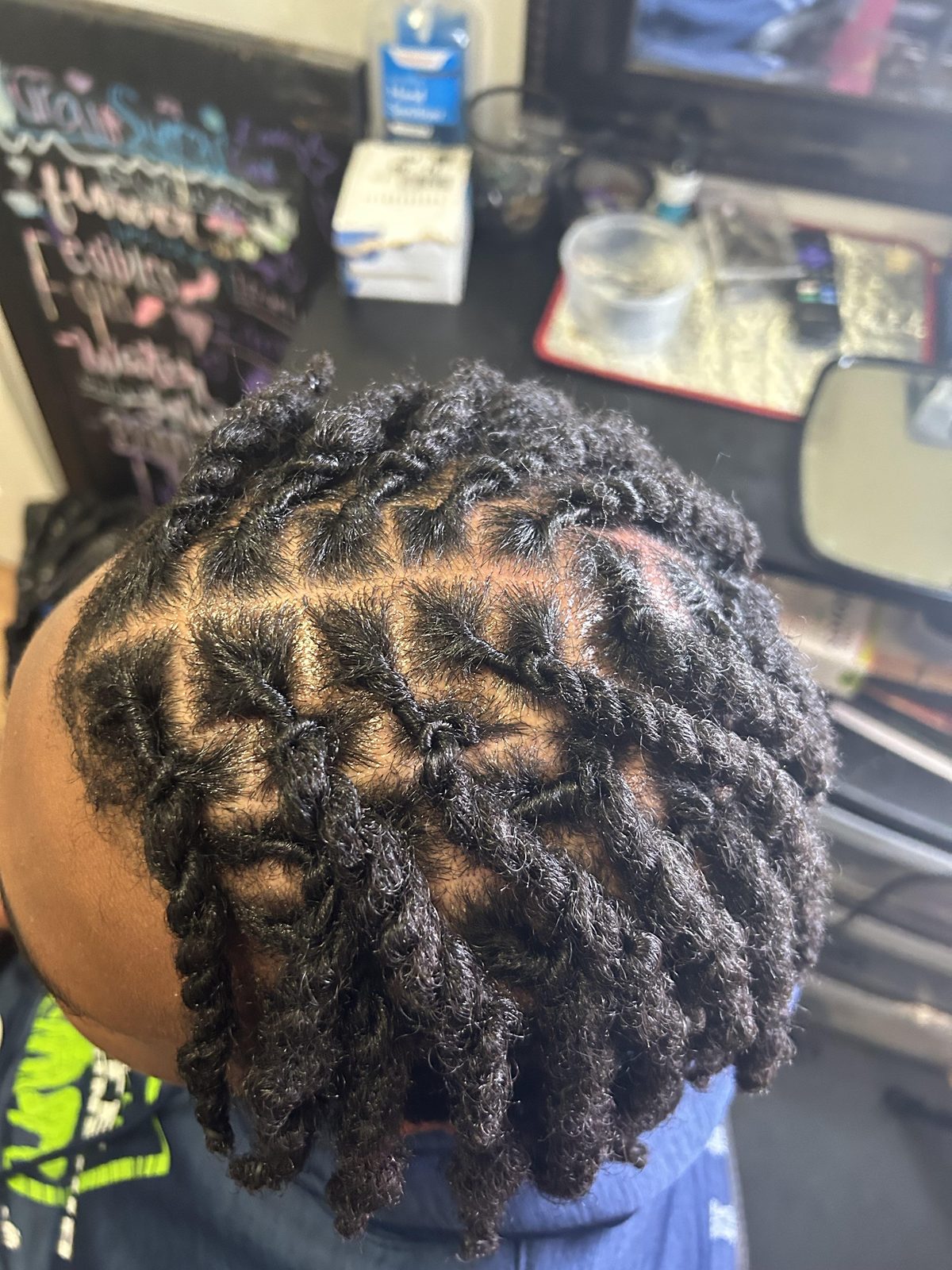
The first few months of your loc journey are the starter phase, when your locs are freshly installed and most fragile. Whether you began with comb coils, two-strand twists, or interlocking, your locs are just starting to form and need gentle, patient care. They may look neat and defined, and they'll likely have some frizz — both are completely normal.
During this phase, the most important rule is to let them be. Avoid over-manipulating, twisting at home, or excessive washing. We'll give you a washing schedule using residue-free shampoo that keeps your scalp healthy without unraveling your starter locs. Sleeping in a satin or silk cap protects your parts and minimizes frizz.
Your first retwist typically falls in this window — around 4 to 8 weeks depending on your method. We space retwists intentionally; over-retwisting in the starter phase is a leading cause of thinning, so patience pays off.
The budding phase (months 3–6)
Around months 3 to 6, your locs enter the budding phase. You'll notice them starting to swell and mesh at certain points — this is the loc literally beginning to loc, and it's a milestone to celebrate. The buds are the internal fibers matting together, which is exactly what creates mature locs over time.
This phase can feel messy. Frizz increases, and locs may look less uniform than when they were installed. Resist the urge to over-tighten or constantly retwist to make them look neat — the budding is the process working. Stay on your retwist schedule, keep your scalp clean, and trust the journey.
This is also when many clients have questions, and we're here for them. Bring your concerns to your retwist appointments, and we'll assess how your locs are maturing and adjust your care as needed.
The teen phase (months 6–12)
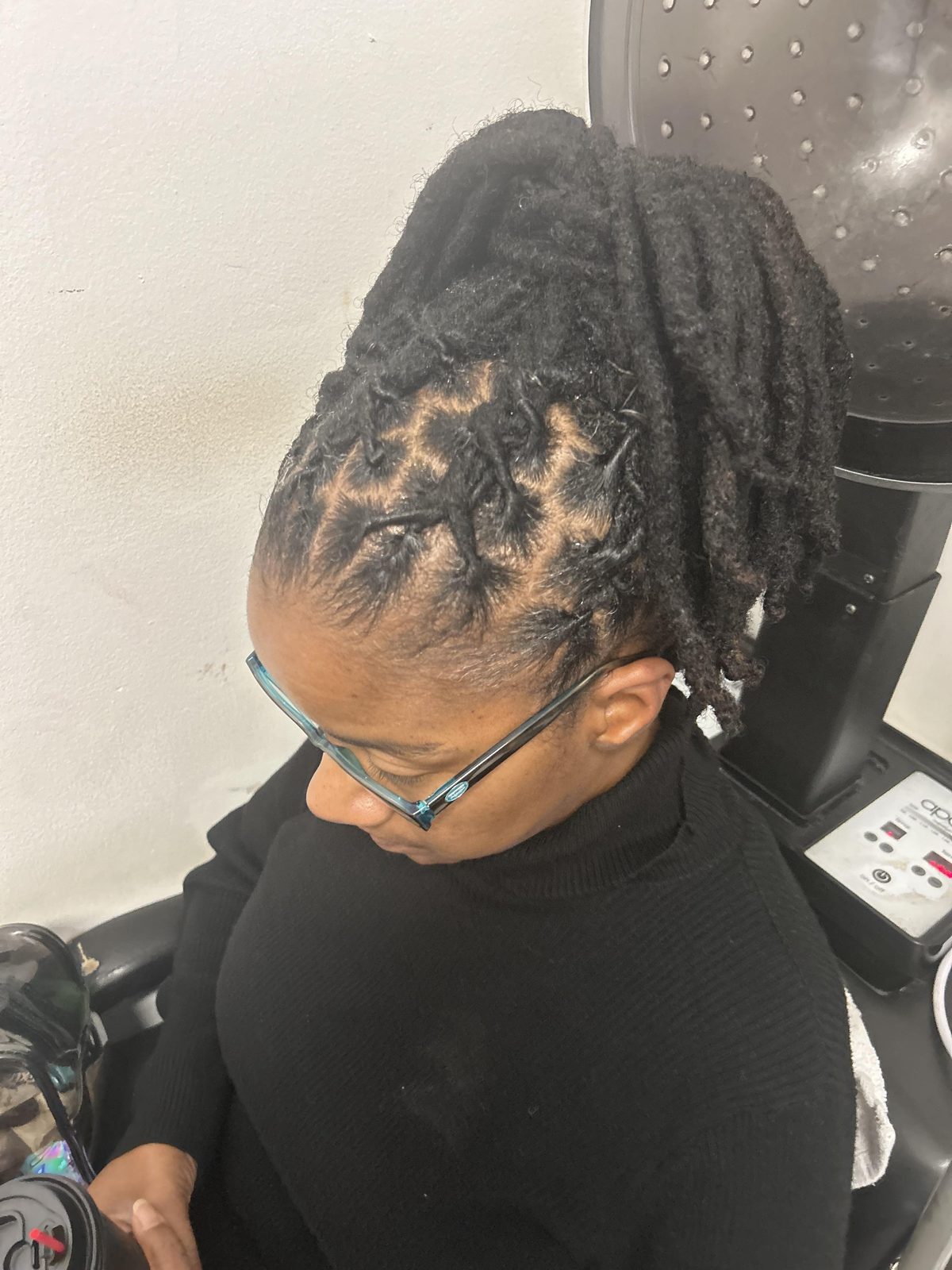
In the second half of your first year, your locs reach the teen phase — they're mostly formed but still settling. They'll be firmer, more defined, and starting to take on the personality of mature locs. Frizz decreases as the internal structure solidifies, and styling becomes more versatile.
Teen locs can handle more: you can style them more freely, wash a bit more often, and experiment with updos. Still, healthy tension at retwists remains essential. We continue retwisting with gentle, consistent pressure so roots stay tidy without thinning. This is also when loc repair, if any thinning occurred early, is most effective.
By the end of your first year, you'll have a strong sense of how your locs are maturing and a clear care routine. Many clients see their locs looking intentional and beautiful at the 12-month mark, with full maturity developing over the following year.
Washing starter locs the right way
A common worry is that washing will undo starter locs. Done correctly, it won't. Use a residue-free shampoo, focus on your scalp, and let suds run through your locs rather than scrubbing them. In the early weeks, you may wash less often and use a shower cap between washes; as locs mature, you can wash more regularly.
Always dry your locs thoroughly after washing — damp locs can develop a musty smell and weaken. We'll show you how to dry fully, and we can steam-clean and deep-condition locs at the salon for a fresh, healthy reset.
Choosing your retwist method and schedule
Your retwist method — palm rolling, interlocking, or latch hook — depends on your hair type and lifestyle, and we recommend the right one at your starter locs consultation. Active clients and finer locs often benefit from interlocking; most textures do well with palm rolling. The method affects how often you retwist, too.
Generally, retwist every 4 to 8 weeks in the first year. Your growth rate and loc stage decide the exact cadence, and we set it together. The goal is tidy roots and even maturation without the thinning that over-tightening causes — a hallmark of healthy loc care.
Starting your journey with support
The first year of locs is a commitment, and you don't have to navigate it alone. A consultation before you start helps you choose your method and set realistic expectations, and regular retwists keep your locs on track. Many of our clients from across metro Atlanta say the support through year one made all the difference.
If you're considering starter locs, book a consultation. We'll assess your hair, recommend your method, and walk you through the first year so you start your journey with confidence.
Frequently asked
- How often should I retwist in the first year?
- Every 4–8 weeks, depending on method and growth. We set your schedule to keep roots tidy without thinning.
- Will my starter locs look messy?
- Some frizz and swelling during budding is normal and healthy. It's the process of locs forming — not a problem.
- Can I wash starter locs?
- Yes, with residue-free shampoo focused on the scalp. We give you a schedule that keeps your scalp healthy without unraveling locs.
- When will my locs look mature?
- Most locs mature over 12–24 months. By the end of year one, you'll see intentional, beautiful locs continuing to settle.
Related services
Ready to book?
Our texture specialists at LOC & Curl Xpress ATL Salon are ready to care for your hair. Book your appointment today.
Book Now